In the Mood for Love
“The most erotic film ever made with nothing in it.”
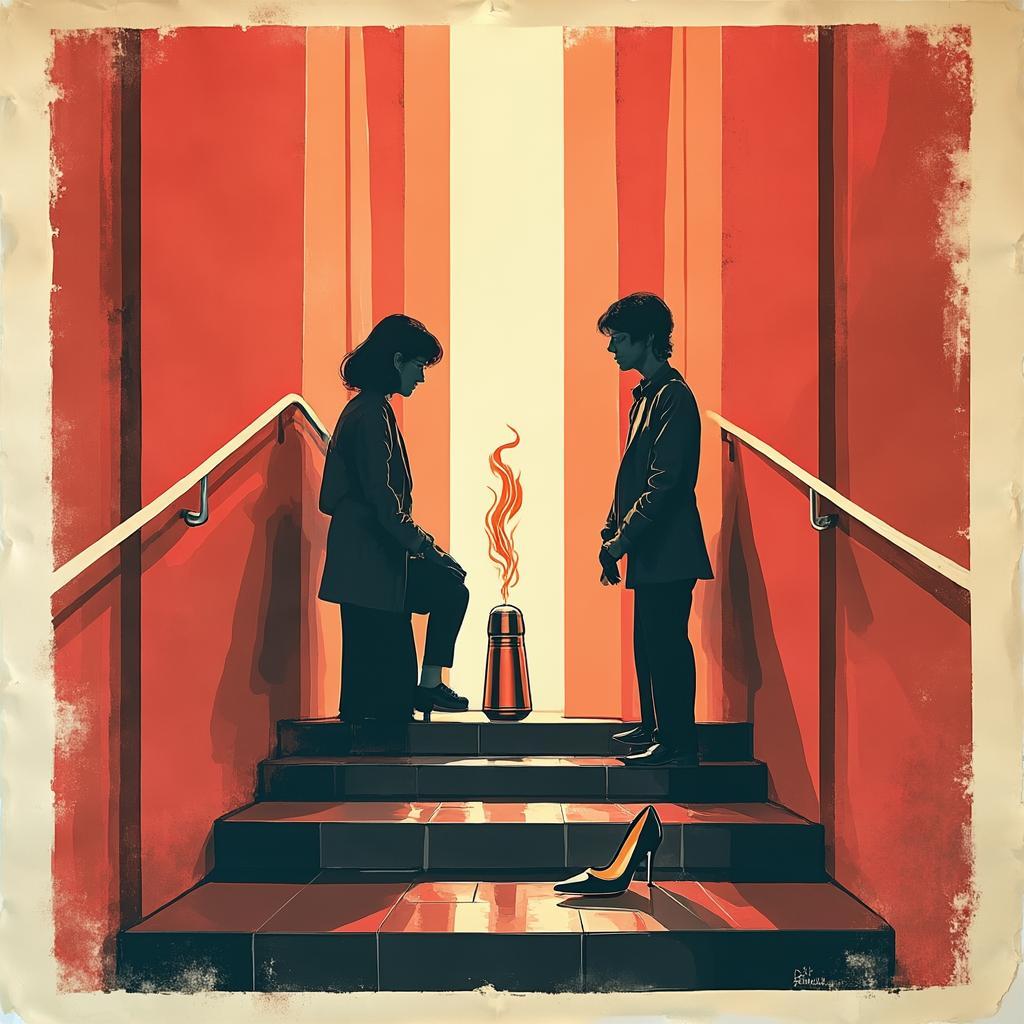
- if you think subtitled slow cinema isn't for you
- if you want a romance with no romance in it
- if you've only seen Wong Kar-wai's name on a Criterion spine
- if you love games that trust you to notice things
You don’t watch slow subtitled films. I know. The art-house framing. The runtime where “nothing happens.” You’ve seen the poster — two beautiful people standing in a rain-soaked alley in 1960s Hong Kong — and filed it under films other people pretend to love. Fair enough. Most of them are a chore with a soundtrack.
In the Mood for Love is not most of them.
The plot, stated plainly, sounds like a joke. A man and a woman, in 1962 Hong Kong, discover their spouses are having an affair with each other. That’s it. That’s the engine. What the film does with it is two hours of two people circling each other — rehearsing confrontations with their own spouses, role-playing what they’d say, eating noodles alone in a stairwell at midnight because it’s the only time the neighbourhood isn’t watching. Their spouses are almost never on screen. You see the back of a head. A voice through a wall. The affair you never see is more vivid than most films’ actual content.
Nothing happens. Everything happens. Chow and Su Li-zhen fall in love almost entirely in glances, in the way she reaches past him for a bag, in how the same stairwell shot repeats until you realise the repetition is the feeling — the aching loop of being somewhere you shouldn’t be, with someone you can’t want, in a community where everyone has eyes.
Here’s the bit that should land for you specifically: Wong Kar-wai shoots this like a designer builds levels. Tight corridors, doorframes, the camera never quite showing you the whole room — you’re constantly inferring space and motive from fragments, exactly the way a good game trusts you to read an environment instead of exposition-dumping at you. There’s a sequence set to “Yumeji’s Theme” where the same three shots repeat like a musical phrase, and the meaning lives in the editing, not the dialogue. Nothing is stated. Everything is legible. If you’ve ever loved a moment in a game where you understood what a character felt purely from how the scene was blocked, this is that, for two hours, at a hundred frames a minute.
And the ending. Wong Kar-wai shot the film over a year, threw out most of what he filmed, and landed on an ending that withholds the one thing you think the film owes you. It’s devastating in the specific way that only restraint can be — you’ll replay it for weeks, which for a film this quiet is the whole trick.
It’s on the Criterion Channel and MUBI, and this is the rare Criterion spine that earns the sticker. The reputation is not a fashion. Watch it alone, late, with headphones.
Two people, one stairwell, and the affair neither of them has.