Kentucky Route Zero
“A magical realist road trip through America's unpaid debts.”
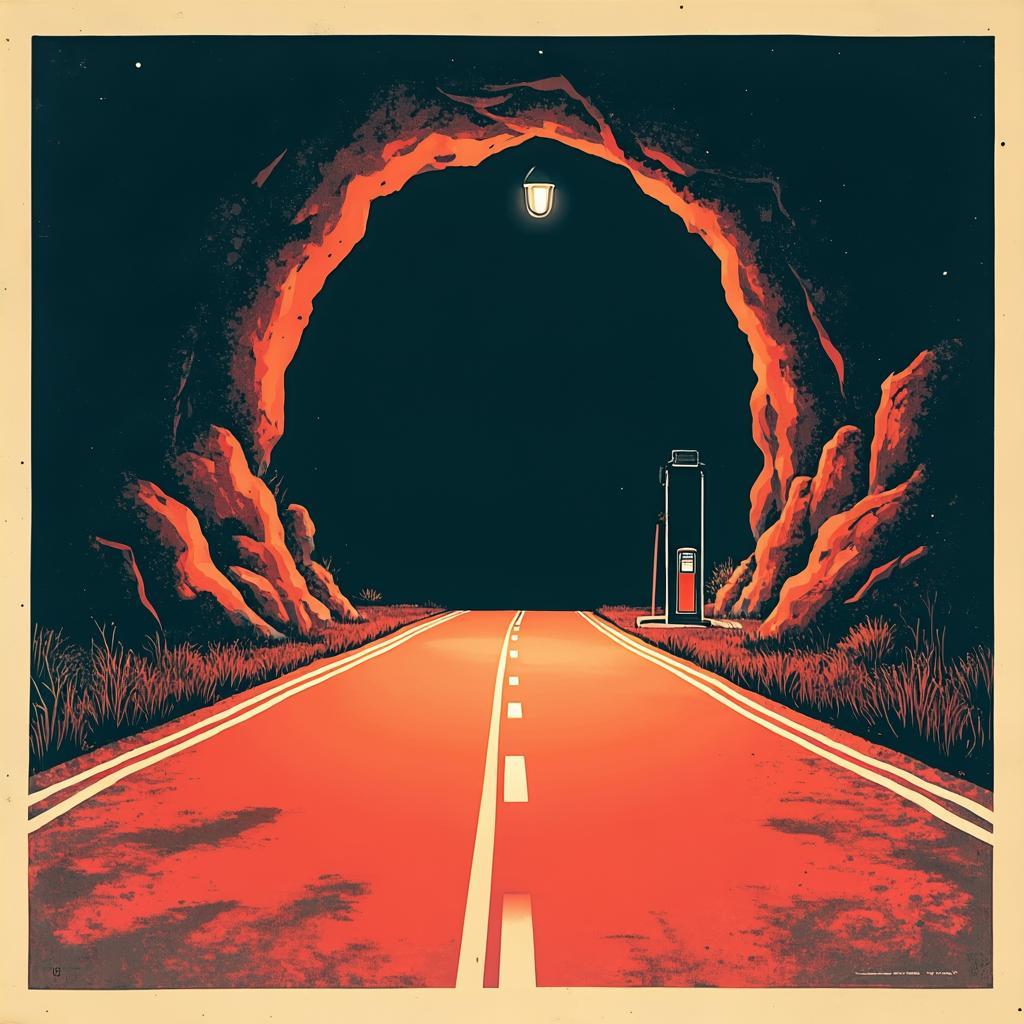
- if you loved Disco Elysium but want something quieter and stranger
- if you read literary fiction and think games aren't for you
- if you're tired of games that mistake scale for substance
- if you want to feel like you're inside a Flannery O'Connor story
A game about debt. I can hear you clicking away already. A magical realist point-and-click adventure about a man delivering antiques through a hidden highway under Kentucky — that sounds like homework, doesn’t it? A “games as literature” pick. Something you’re supposed to respect rather than enjoy. Something a website would assign you.
Here’s the thing. Kentucky Route Zero runs about eight hours. You walk. You occasionally click a line of dialogue. There is no combat, no skill tree, no map full of question marks. And it uses that stillness to do something almost nothing else in the medium attempts: it talks about money the way real books talk about money. What it does to people. How it moves invisibly through a landscape. One of its central locations is a mining company that owns a entire town through an entanglement of loans, and everyone in it owes somebody something, and nobody gets out.
The premise: Conway, an old delivery driver with an unpaid bill and a bad leg, is trying to make one last shipment for a distillery he can’t find. To get there he takes the Zero — a secret road that runs through caves beneath Kentucky. Along the way he picks up a boy with no family, a woman who lost her workplace to the Bureau of Reclaimed Spaces, a confused machine, and a bird. Their destinations keep shifting. The road keeps going.
The craft is the argument. Every scene is lit like a stage play — flat colour, hard shadows, characters standing in pools of light. Dialogue works like a script: sometimes you pick what Conway says, sometimes you pick a stage direction — he looks at the floor. He doesn’t say anything. — and the game quietly understands that choosing silence is a choice. There’s a moment where it asks you to describe a word from your own life so it can put it in someone else’s mouth. It never makes a fuss about any of this. It just does it and moves on, dry as a Kentucky winter.
If you loved Disco Elysium and came out the other side hungry for something quieter and stranger — less noise, more fog — this is the one. And if you’re the reader who thinks games aren’t for you, who reads McCarthy and O’Connor and watches A24 films and has never once considered a video game as a place for that kind of writing: this is the bridge. Eight hours. No dexterity required. Nothing to master but your own attention.
It came out in five acts between 2013 and 2020, which is why people my age mention it like a rumour — we kept getting one chapter every couple of years and holding the rest in our heads. It’s finished now. The whole road is there.
You drive a van through a cave and you meet people who owe money, and you never stop thinking about it. That’s the pitch.